
Distinguishing Between Dynamic and Static QR Code – Which One Should You Use?
In today’s digital era, QR code have become a vital part of many businesses’ marketing strategies and data management systems. However, when choosing to use QR codes, a common question arises: “What’s the difference between Dynamic and Static QR codes?”.
The distinction between these two types of QR codes affects not only how they are implemented but also determines the overall effectiveness of a marketing campaign. In this article, iCheckQR will help you explore the features, pros, and cons of each type, and guide you in selecting the most suitable option for your specific needs.
1. What Is a QR Code? A Basic Introduction
Definition and History
A QR code (Quick Response Code) is a two-dimensional barcode initially developed in 1994 by Denso Wave, a subsidiary of Toyota in Japan. Unlike traditional barcodes that can only be read horizontally, QR codes encode data both horizontally and vertically, allowing them to store much more information—such as text, website links, contact info, maps, etc.
Originally intended for automotive parts tracking, QR codes quickly expanded into various fields due to their fast scanning speed and versatile data capacity.

Real-Life Applications
Today, QR codes are widely used across industries thanks to their convenience and quick access to information:
Business: Inventory tracking, product info display, traceability, promotions (especially dynamic QR codes).
Education: Link to study materials, online lectures, student surveys.
Healthcare: Electronic medical records, appointment scheduling, health tracking QR codes.
Events & Entertainment: E-tickets, event check-ins.
Retail & E-commerce: Promo codes, product details, contactless payment.

2. What Is a Static QR Code?
Features of Static QR Codes
A Static QR code contains all the embedded data directly within the code and cannot be changed after it's created.
For example: if you create a static QR code linking to a specific webpage (e.g., https://icheck.vn), that link is permanent—even if you later want to change it, you can’t.
Static codes work independently, requiring no connection to a server, making them ideal for basic uses like sharing fixed information (web links, emails, phone numbers, short text, etc.).

Pros and Cons of Static QR Codes
3. What Is a Dynamic QR Code?
Features of Dynamic QR Code
A Dynamic QR code doesn’t directly encode the final content. Instead, it contains a redirect URL, which leads to the destination (e.g., website, PDF, video). This means you can edit the destination content even after the QR code has been printed or distributed.
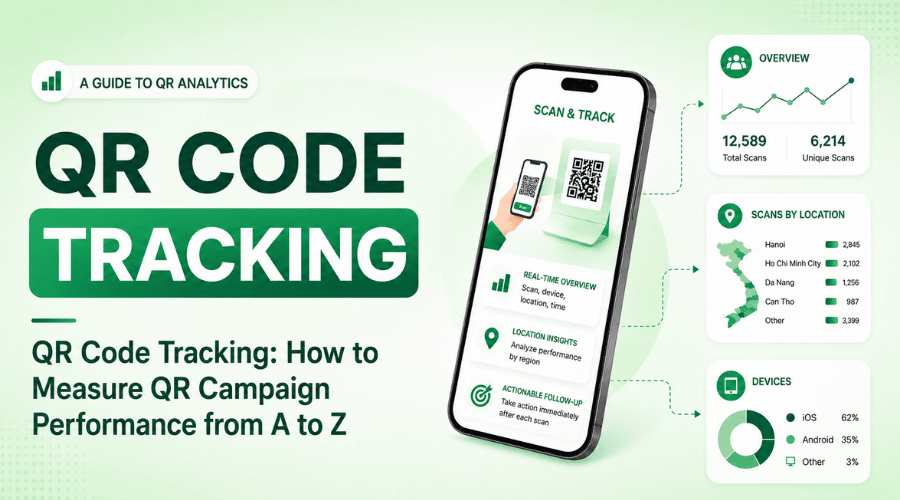
Additionally, dynamic QR codes support data analytics—including scan count, location, time, device type, etc. This makes them incredibly valuable for marketing campaigns, event engagement, and customer data management.
Pros and Cons of Dynamic QR Codes

4. Detailed Comparison Table: Static vs. Dynamic QR
To better understand the differences between dynamic and static QR codes, the table below illustrates the key distinctions between these two types based on important criteria such as editability, data analytics, cost, and scope of application.
Summary: Static QR codes are suitable for simple, unchanging information where analytics aren't needed. In contrast, dynamic QR codes offer flexibility, user engagement tracking, and campaign optimization—ideal for businesses or frequently updated content.
5. Which Should You Choose? Suggestions by Use Case
For Individuals
Static QR codes are perfect for:
Digital business cards (vCard)
Personal CVs
Social media profiles
Personal portfolios
They are free, easy to generate, don’t require server access, and serve basic info efficiently.

For Businesses
If your business needs:
Flexible campaign updates
Changeable content without reprinting
Tracking user behavior (scans, location, time)
Marketing performance optimization
Then Dynamic QR codes are essential. Their ability to update content and provide detailed analytics helps businesses engage and convert customers more effectively.
6. How to Create Free Static and Dynamic QR Codes with iCheckQR
iCheckQR is a trusted QR platform in Vietnam that allows users to create both static and dynamic QR codes quickly and for free.

Create a Static QR in 3 Steps
No account needed. Ideal for fixed info (website, phone, email).
Enter data to be encoded (URL, text, business card, etc.)
Click “Generate QR” to create it automatically
Click “Download QR” (formats: PNG, SVG)

Create & Manage Dynamic QR Codes
Requires a free account to unlock features like content editing and scan analytics.
Log in at https://qr.icheck.vn
Choose data type (URL, PDF, video, etc.)
Generate the dynamic QR
Edit content anytime
Track scans by count, time, device, and location
7. Best Practices for Using QR Codes Effectively
Whether static or dynamic, QR codes must be well-designed, properly managed, and secure (especially dynamic codes).
QR Design Tips
High contrast: Dark code on light background
Minimum size: At least 2.5cm x 2.5cm for business cards; larger for billboards
Quiet zone: Add white space around the QR for better scanability

Managing & Securing Dynamic QR Codes
Dynamic codes link through a server and require careful handling:
Suggestions:
Add password protection for sensitive content
Limit access to analytics dashboard
Monitor unusual scan activity
8. FAQs About Dynamic and Static QR Codes
Do Dynamic QR Codes Expire?
It depends on the provider. With iCheckQR, dynamic codes do not expire as long as your account remains active.
Free plan: Unlimited use duration unless manually deleted or terms are violated.
Pro plan: Includes advanced features like bulk generation, deep analytics, interface customization, etc.
Do I Have to Pay to Use Dynamic QR Codes?
No, not necessarily. iCheckQR offers a Freemium model, allowing you to use basic dynamic QR features for free:
Free Plan:
Create and edit dynamic QR codes
Basic scan analytics (count, time, location, device)
Unlimited usage duration
Ideal for individuals and small business testing
Pro Plan (Paid):
Unlimited dynamic code generation
Advanced analytics (behavior insights)
Branded customization (logo, domain, landing page)
Suitable for marketing teams and enterprises
(Note: You can upgrade anytime from free to Pro.)
Conclusion
Both Static and Dynamic QR codes serve unique purposes. If you simply need to share unchanging info, Static QR is ideal. For dynamic content, user tracking, and marketing optimization, Dynamic QR is the superior choice.
Don’t miss the chance to maximize your QR strategy! Create your free QR code today with iCheckQR and take your personal or business marketing to the next level.