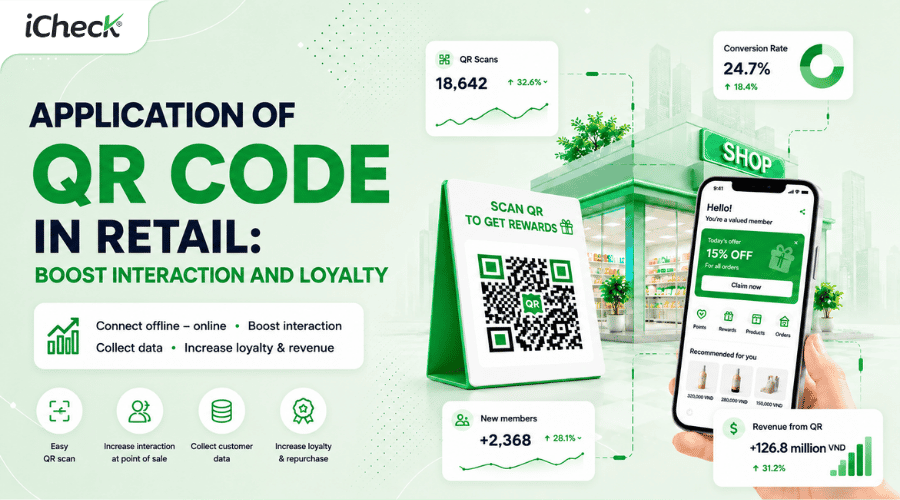

Advantages of QR Codes in Offline Advertising
Two-way communication
Traditional advertising is largely a one-way street — you push a message out, but getting genuine feedback back is hard. Dynamic QR codes change that by creating a direct, interactive bridge between the brand and the audience.
By scanning a QR code, users can participate in surveys, polls, or Q&A sessions. This lets businesses collect real-time feedback, gaining a clearer picture of customer needs and behavior.
Example: An event company prints QR codes on tickets, directing attendees to a quick post-event survey — generating actionable insights to improve future events.
 Two-way interaction helps attendees feel more genuinely connected to the brand.
Gamification
Gamification turns everyday brand interactions into entertaining experiences — and QR codes make it surprisingly easy to bring this into offline campaigns.
QR codes placed on magazines, billboards, or product packaging can lead users to online games or interactive challenges. Completing activities earns points, rewards, or exclusive discounts.
The result: higher engagement rates, longer brand exposure, and stronger recall.
Example: A fashion brand places QR codes on billboards linking to an outfit-styling game, where players unlock discount codes after completing the challenge.
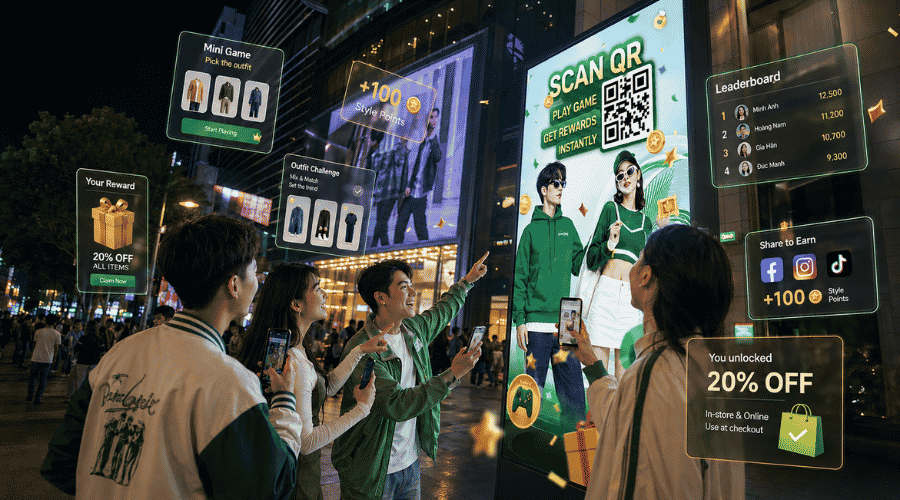 Event QR codes can boost participation through fun, interactive experiences.
Easy management
One of the biggest advantages of dynamic QR codes is how easy they are to manage and update — without ever needing to reprint.
Once created, the content behind a QR code can be changed anytime through the management platform. This saves both time and printing costs while keeping your offline materials current.
Centralized management also makes it easy to monitor and adjust content across multiple campaigns from a single dashboard.
Example: A real estate company updates project details or pricing on QR codes already printed in brochures — no reprinting required.
Customer data tracking
Dynamic QR codes give businesses a window into how customers actually interact with their offline advertising.
Trackable metrics include:
Total number of scans
Time of scan
User location
This data helps businesses understand campaign performance and customer behavior, enabling smarter targeting and more effective marketing strategies.
Example: A coffee chain uses QR codes on flyers to track how well a promotion is performing, broken down by scan volume and customer location.
 QR scan data helps businesses measure the effectiveness of offline advertising with real precision.
Flexibility and adaptability
Dynamic QR codes are built for modern marketing, especially phygital models that blend offline and online seamlessly.
Businesses can quickly update QR content to align with new campaigns or product changes — keeping offline materials relevant and accurate at all times.
Example: A travel company swaps out the deal shown on a QR code placed at an airport — without replacing the entire display.
How to create a custom QR code
Creating a custom QR code is straightforward. Here’s the basic process:
Go to a QR code generation platform
Select the appropriate code type (URL, file, digital content, etc.)
Enter the required information
Choose between a static or dynamic code
Customize the design (logo, colors, shape)
Test it to make sure it works
Download and deploy
Tips for best results
Try a free plan before committing to a paid subscription
Use SVG format for print materials to ensure sharp, high-quality output
Use PNG format for digital platforms
Conclusion
QR codes are fast becoming a cornerstone of modern marketing strategy. With the ability to boost engagement, collect data, and update content on the fly, they help businesses make their offline advertising significantly more effective — and their customer experiences significantly better.
Used well, QR codes help businesses cut costs, sharpen campaign performance, and unlock the full potential of traditional marketing channels in a digital-first world.