
Detailed instructions for creating QR codes for free Links
In the digital age of 2025, QR codes are more than just a convenient tool - they’re the "golden bridge" of every modern marketing campaign. Whether directing customers to websites, landing pages, product videos, or increasing interaction at offline events, QR codes for links have become an essential element for every business and marketer.
Looking for a way to create link QR codes that are easy, professional, brand-consistent, and measurable? In this comprehensive guide, iCheckQR walks you through everything from A-Z: types of QR codes, step-by-step instructions, best use cases in marketing, performance tracking, and critical tips. Let’s dive in!
1. What is a Link QR Code?
Simple Definition
A link QR code (also known as a URL QR code) is a type of 2D barcode that can be scanned with a smartphone camera. Upon scanning, users are instantly redirected to a specific link such as a website, video, social media, registration form, blog post, and more.

Advantages of Using Link QR Codes
Easy to Use & Access: Users simply open the camera → scan → access the link without typing.
Time-Saving: No need to type long URLs — access in just 1–2 seconds.
Fast & Effective Marketing: Print QR codes on flyers, packaging, posters to instantly boost traffic.
Modern & Professional: Demonstrates your brand's innovation and tech-friendliness.
Trackable & Analyzable: Some QR tools allow you to track scans, location, time, etc.
Versatile for Sharing: Easily shared via print, email, social media, websites.
Comparison Table: With vs. Without QR Codes

2. Common Types of Link QR Codes
What is a Static QR Code?
A static QR code has fixed content encoded into the image. Once generated, it cannot be changed. All scans lead to the same information (e.g., a URL, text, or phone number).
Example: You create a QR code for https://abc.com/sale2025 and print it on 10,000 flyers. If the promo changes, you can’t update the link.
Key Features:
Data is directly embedded in the image
Works offline
Cannot be edited after creation
No scan tracking
Free with most QR tools
Best Use Cases:
What is a Dynamic QR Code?
A dynamic QR code redirects via an intermediary URL (usually from a QR platform), allowing you to update the destination link anytime without reprinting the QR code.
Example: You print a QR code on product packaging. Even after printing, you can change the destination from Link A to Link B — saving reprinting costs.
Advanced Benefits:
Edit destination anytime – no need to recreate QR code
Track performance – scan count, location, time
Enhanced security – password protection, scan limits, expiration
Marketing flexibility – reuse for seasonal or multi-stage campaigns
Advanced integrations – CRM, APIs, mini landing pages
3. Step-by-Step Guide to Creating a QR Code for a Link
Step 1: Prepare a Quality Link
Ensure your link is:
Secure (HTTPS) – protects users from browser warnings
Short & clean – avoid complex characters like ?id=123abc
Branded & memorable – use branded domains like icheckqr.com/sale
SEO-friendly – use clear keywords: example.com/tet-promo-2025
Fully functional – test it on a browser to avoid broken redirects
Step 2: Choose a Trusted QR Code Generator
Pick a reputable QR tool for high-quality images, branding customization, and secure analytics.
Recommended Tools:
iCheckQR – Custom QR designs with scan analytics
ME-QR – Editable content post-creation
QRCode-Tiger – Advanced features and branding
Canva – Creative designs (static only, no analytics)
GoQR.me – Fast, free, simple (limited features)
Look for platforms that support high-res downloads and scan analytics for marketing.
Step 3: Customize Your QR Code
Boost your brand presence with visual customization:
Insert Logo – Place your company/app logo in the center
Color Customization – Match your brand’s color scheme, but avoid overly light tones
Add CTA Frame – “Scan for offers”, “Scan me!” to improve scan rates

Step 4: Download & Test Your QR Code
Download Formats:
PNG – For websites, social media, general documents
SVG – For high-res vector printing
EPS – For design tools like Adobe Illustrator
Pre-Use Checklist:
Test scan with various apps (Zalo, Google Lens, QR & Barcode Scanner)
Scan speed <2 seconds
Try in low-light, small-size print
Confirm the link opens the correct content
Ensure clarity on all backgrounds
Print-test for sharpness (if used in physical materials)
4. 10 Ways to use Link QR Codes in Marketing
Website or Personal Blog
Embed a QR code into your website or personal blog to enhance quick access: It allows users to easily visit your site or blog by simply scanning a QR code with their phone. The QR code can be placed prominently in the header, footer, or within blog posts.

Product Packaging Advertising
Create a QR code on product packaging to connect with customers: Link it to a product introduction page, user manual, instructional video, or feedback form. The QR code can be printed directly on the box, stickers, or product tags.

PDF Documents and Company Profiles
Insert a QR code into digital documents such as PDFs or business profiles: This can direct users to company introduction videos, product catalogs, campaign landing pages, and more. Adding QR codes enhances the interactivity of your materials.

Social Media and Livestreams
Use QR codes across social media platforms and livestreams to boost conversions: Place QR codes on profile pictures, cover photos, livestream screens, etc., enabling viewers to easily access landing pages, registration forms, or other accounts.
Email Marketing and Email Signatures
Embed a QR code in emails to increase engagement rates: In email marketing content, QR codes can link to landing pages, introduction videos, or surveys. Including a QR code in your email signature is also a subtle yet effective way to promote your website, portfolio, or social media.
Business Cards and Event Badges
Create modern digital business cards with QR codes linking to personal or company profiles: QR codes on business cards allow recipients to scan and instantly save contact information, access websites, schedule appointments, or connect on LinkedIn. Additionally, event name badges can include QR codes for checking information or sending documents.

Posters, Standees, and Advertising Banners
Increase offline media effectiveness with QR codes: Printed materials such as posters, standees, or outdoor banners can include QR codes that lead to campaign landing pages, promotional programs, or event registration forms.

Events, Fairs, and Exhibitions
Manage and interact with customers at events using QR codes: Use QR codes for check-ins, downloading documents, signing up for gifts, or scanning to view product introduction videos directly at booths. This is a modern way to instantly connect with attendees.
Influencer and KOL Campaigns
Integrate QR codes into promotional content by influencers/KOLs: Influencers can embed QR codes in videos, stories, or post images to link to affiliate products, landing pages, or campaign URLs. QR codes make it easier to track the performance of each KOL individually.
Corporate Gift Printing
Turn gifts into smart marketing tools using QR codes: Print QR codes on mugs, t-shirts, notebooks, USB drives, canvas bags, etc., so recipients can scan to access exclusive offers, landing pages, or personalized thank-you messages from your business.

5. How to Track and Analyze the Effectiveness of QR Codes for Links
Using Analytics Tools (Google Analytics, UTM Tracking)
To track the effectiveness of a QR code, you need to add UTM parameters to the link before generating the QR code, and then connect it to Google Analytics to analyze user behavior.
Standard Implementation Steps:
Create a UTM-tagged link: Use tools like Google Campaign URL Builder.
Example: https://yourdomain.com/landing?utm_source=qrcode&utm_medium=print&utm_campaign=promo2025
Paste the UTM link into a QR code generator: Create either a static or dynamic QR code using this link.
Connect with Google Analytics 4 (GA4):
Go to Reports → Acquisition → Traffic acquisition
Filter results using utm_source, utm_medium, and utm_campaign to track your QR campaign.
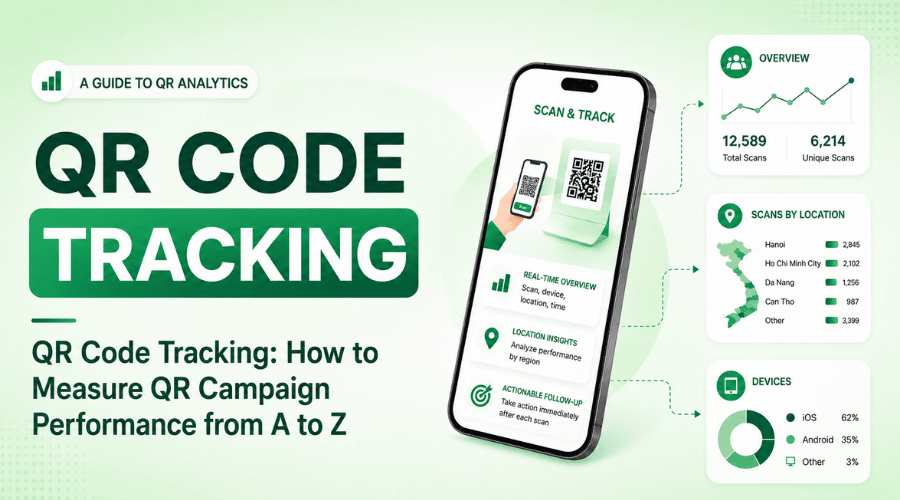
Measuring Scan Count, Location, and Device Type
Advanced dynamic QR code tools (like QRCode-Tiger, ME-QR, Unitag) provide detailed analytics dashboards, including the following metrics:
Sample Data Table:
Optimization Tips After Analysis (Bullet Points):
Localize promotions for high-scan locations: E.g., if scans from Ho Chi Minh City are high → offer exclusive deals for this area.
Design content for the most-used devices: If most users are on Android/iOS, ensure the content is mobile-optimized.
Schedule content based on peak engagement times: If users often scan codes around noon or evening → schedule social media posts accordingly.
Monitor scan performance regularly: A sudden drop may indicate an expired link, printing error, or unappealing content.
Conduct A/B testing with different QR codes: Create two different QR designs or CTAs linking to similar content to determine which performs better.
6. Notes and common mistakes to avoid when creating QR Codes for Links
Broken or Inactive Links
One of the most critical mistakes when creating a QR code is attaching a broken or expired link. This not only creates a negative user experience but also wastes printing and marketing costs.

Overly Complex QR Code Design
Customizing QR codes is a popular trend, especially in marketing campaigns. However, without adhering to basic technical principles, QR codes can become:
Difficult to scan on smartphones
Unreadable due to unclear color contrasts
Blurry or distorted when printed in small sizes
Technical Guidelines for Easy-to-Scan QR Codes:
7. Trusted Free and Paid QR Code Generators for Links
Choosing the right QR code generator not only optimizes usability but also ensures quality, security, and analytics capabilities for your marketing campaigns.
Here are the top 3 most reliable QR tools of 2025 — widely used by marketing professionals, designers, and businesses.
Recommended Tools in 2025
8. Frequently Asked Questions About Creating Link QR Codes
Do QR Codes for Links Expire?
It depends on the type of QR code used:
Static QR Codes: Never expire — the link is permanently encoded in the QR. However, if the linked page is deleted or renamed, the code will no longer work.
Dynamic QR Codes: Can have an expiration time or be turned on/off manually. Ideal for temporary campaigns.
Example: You create a dynamic QR code for a promotion that ends on April 30, 2025. After that date, anyone scanning the code sees a message: "This promotion has ended — Thank you for your interest!"
Are QR Codes secure?
No, QR codes themselves are not secure — anyone who scans them can see the content. However, you can secure access to the content by:
Using dynamic QR codes with passwords, scan limits, or expiration times
Linking to content that requires login or is encrypted
Example: You generate a QR code that links to internal documents → use a dynamic QR code + password → only those with the password can access it.
How many people can scan a QR Code at the same time?
There is no limit to the number of people who can scan a QR code simultaneously. A single QR code can be scanned by hundreds, thousands, or even millions of users without affecting functionality — as long as the link remains active and is not restricted by the hosting server.
Example: You print a QR code on a shopping mall poster → 100 people scan it within a minute and all can access the link normally.
Conclusion
A QR code for links is more than just a sharing tool — it's a “smart bridge” between your brand and your audience in the digital age. With easy creation, flexible customization, in-depth analytics, and multi-platform compatibility, QR codes are becoming an indispensable part of modern marketing strategies.
Whether you're a large enterprise, startup, solo entrepreneur, or just want to share information professionally — start creating QR codes for your links today to stay ahead of the 2025 trend.
Create a QR code for free in just 1 minute with iCheckQR.