

12 QR Code Marketing Ideas Brands Are Using in 2026
QR code marketing ideas have moved far beyond printing a code on a flyer — this has become a real conversion channel that small and mid-sized businesses are tapping into to drive traffic, capture leads, and measure results at low cost.
Across Southeast Asia, the QR market is forecast to grow 20% year over year, making QR codes no longer a secondary tool but an increasingly central part of the customer buying journey.
This article covers 12 practical, easy-to-implement QR code marketing ideas suited to SME budgets — including why each approach works and the common mistakes to avoid.
1. Digital Business Card QR Code for Fast Lead Capture
Paper business cards have a well-known problem: people rarely save the contact afterward. In networking events or trade shows, a huge number of leads go nowhere simply because prospects are too busy to type in details or forget to follow up later.
With a digital business card QR code, a single scan lets users:
Save your contact instantly
View your personal or company profile
Connect on LinkedIn
Follow your Zalo OA
Book a consultation
Browse your portfolio or case studies
Why this QR code marketing idea works:
Reduces friction in saving info: Users don't need to type phone numbers or search for the brand. One scan saves the entire contact to the phone, increasing follow-up chances.
Increases networking conversion: For sales or agencies, QR codes turn offline meetings into actual lead funnels instead of just handing out cards for the sake of it.
Tracks sales performance: Dynamic QR codes allow you to track the number of scans, scan times, or which CTAs were clicked. This is data that traditional paper cards almost never provide.
Best-fit industries:
B2B Sales: Long follow-up processes mean quick contact saving reduces lost leads.
Agencies & Freelancers: Portfolios and case studies can be viewed immediately after scanning.
Brokers: Users often need to save information right at the time of meeting.
Common SME mistakes:
Landing page too long — visitors don't know where to focus and bounce quickly
Poor mobile optimization — small fonts and hard-to-tap CTAs kill conversion rates
No clear CTA — many QR codes just point to a generic homepage instead of a specific action like "Book a Consultation"
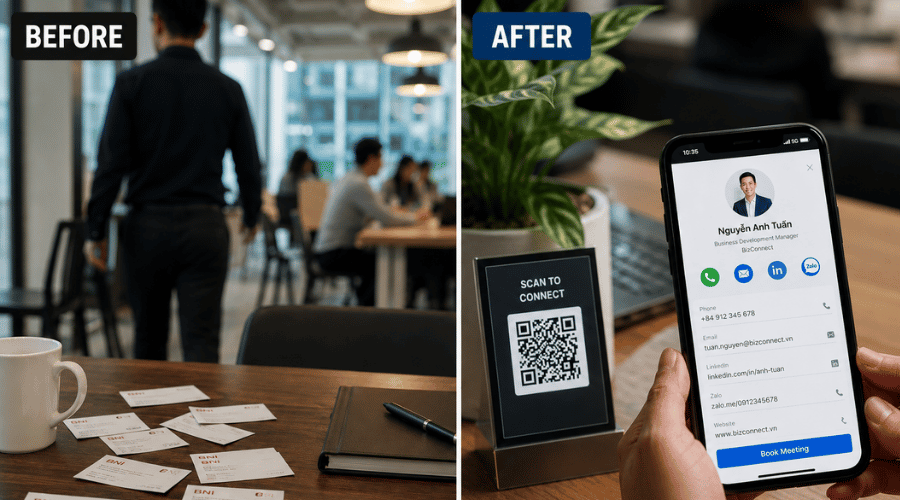 Digital business card QR code helps B2B businesses save contacts quickly and increase follow-up rates after networking
2. Event Registration QR Code to Boost Attendance Rates
Interested attendees often won't follow through on registration if the process involves a long form or requires them to manually search for a link after seeing a poster. The conversion rate from "noticed the event" to "actually signed up" stays frustratingly low.
A QR code on event posters or flyers takes people directly to a registration landing page, online check-in, or an "Add to Calendar" button. Someone standing in front of your poster can scan and register in seconds — no URL to type, no link to hunt down.
Why this QR code marketing idea works:
Shortens the registration journey: From 5–6 steps (search link → visit web → fill form) down to 2 steps: scan → fill. This significantly boosts mobile conversion rates.
Scan directly at the point of presence: Posters, backdrops, flyers, and exhibition booths can all feature QRs. Customers act while they are interested rather than waiting until they get home and forget.
Tracks registration sources: Each offline channel uses a separate QR to identify which one brings the most registrations.
Best-fit industries:
Workshops / Short courses: QRs on posters or flyers help viewers register immediately without losing momentum.
Webinars / Online events: QRs bridge offline channels and online registration, preventing loss of interested parties.
Exhibitions / Fairs: QRs at booths allow customers to save info or register instantly when they stop by.
Common SME mistakes:
Forms that are too long — stick to a maximum of 3 required fields and collect the rest later
Slow-loading landing pages — if a page takes more than 3 seconds on 4G, over 50% of users leave before it loads
No CRM or email automation sync — registrants who don't receive an immediate confirmation email or calendar reminder are far more likely to no-show; at minimum, connect your form to Mailchimp or a simple Google Sheets + Zapier workflow
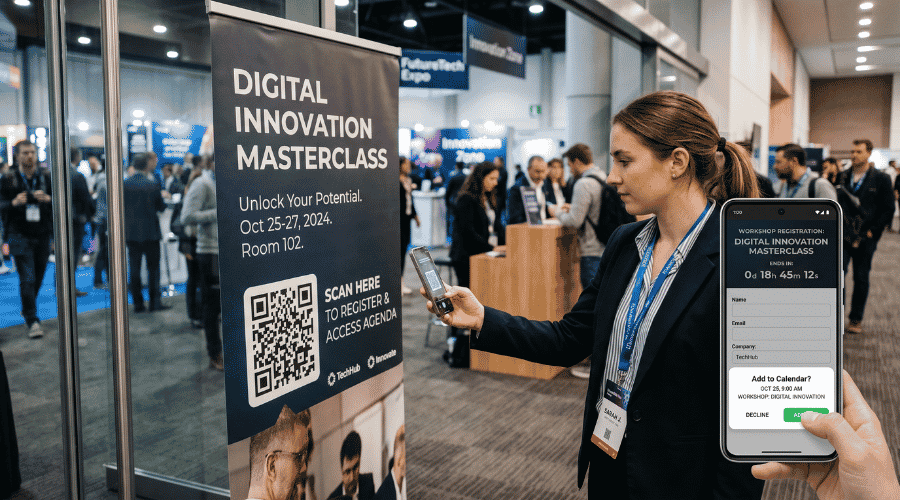 Event registration landing page with QR integration shortens the conversion journey on mobile
3. QR Code for Collecting Reviews and Customer Feedback
Placed at exactly the right moment — right after a service is completed, at a waiting area, or inside a receipt envelope — a QR code takes satisfied customers directly to your Google Review page, a feedback survey, or a customer support chatbot.
This solves a frustrating reality: happy customers often mean to leave a review but never actually do it, leaving your Google Maps profile thin on real testimonials while competitors keep accumulating ratings.
Why this QR code marketing idea works:
Stimulates at the "Golden Moment": Positive emotions after a good experience are the peak time for customers to leave reviews. A QR placed there turns intent into immediate action.
Increases authentic review volume: Just scan to enter the review page. This reduces enough friction for customers to actually do it instead of forgetting.
Supports Local SEO: The quantity and quality of Google Reviews are direct ranking signals on Google Maps and local search. Every extra review is a sustainable competitive advantage.
Best-fit industries:
Restaurants / Eateries: Exploit high post-meal emotions – QRs on invoices or tables for reviews before they leave.
Spa / Hair salon / Nails: Beauty services need real reviews – QRs after completion capture feedback when customers are happiest.
Clinics / Dentistry / Aesthetics: Reviews build trust for new customers – each rating signals credibility and drives bookings.
Common SME mistakes:
Surveys that are too long — most customers have 2 minutes at most after finishing a meal
QR placed in the wrong spot — at the cashier after payment has already been processed is too late; place it on the table, inside the bill folder, or at a waiting area
No light incentive — a small prompt like "Scan to get 10% off your next visit" increases scan rates without compromising review authenticity, since customers still write the review themselves
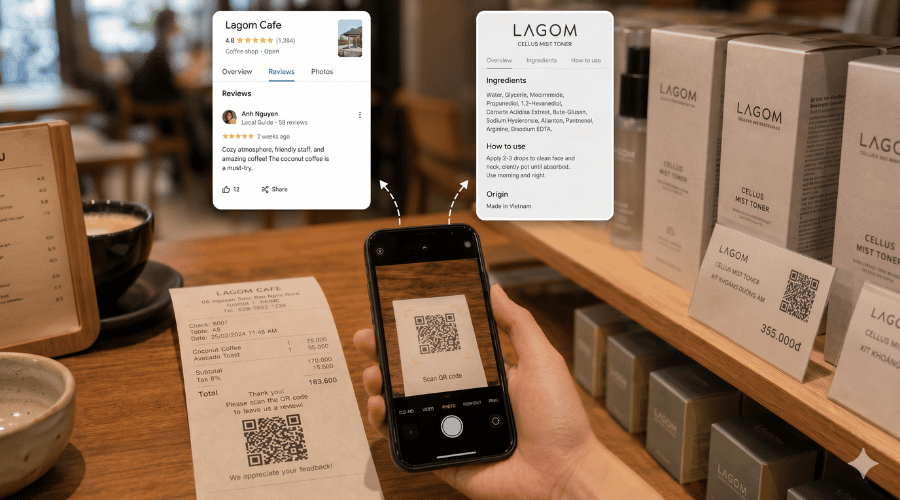 Review QR and product information QR help increase purchase trust and support local SEO for businesses
4. QR Code for Product Information
Customers standing in front of a product often lack enough information to make a buying decision. Repetitive questions about ingredients, usage instructions, and sourcing overload customer service teams and drag out the sales cycle.
A dynamic QR code on a product label or packaging can link directly to usage tutorial videos, a detailed FAQ, certifications and sourcing documentation, storage instructions, or a digital warranty registration. Customers self-serve without needing to flag down a staff member.
Why this QR code marketing idea works:
Reduces pre-purchase hesitation: Customers have enough info to compare and decide. Fewer pending questions mean fewer conversion barriers.
Increases brand trust: Brands willing to be transparent about ingredients, origin, and production show confidence in quality – a strong factor in first-time purchase decisions.
Reduces CS workload: Every question answered via QR is one less support ticket. For complex or premium products, these savings are significant.
Best-fit industries:
Best suited for industries where purchase decisions depend more on information than emotion.
Cosmetics & Supplements: QRs on shelves or packaging help customers check ingredients, origin, and safety instantly.
Electronics & Appliances: QRs lead to comparison pages or review videos, supporting quick purchase decisions.
Handmade & Premium goods: QRs tell the story of the process and quality certifications that packaging cannot fully display.
Common SME mistakes:
Overly technical language — explaining a product in industry jargon that customers don't understand turns QR into a barrier instead of a helper; write for the customer, not for insiders
Videos that are too long — a 10-minute tutorial gets watched by almost nobody; cap at 90 seconds and get straight to the practical steps
Poor mobile UX — if the information page doesn't render well on a phone, with small text that requires zooming or horizontal scrolling, customers bounce and don't come back
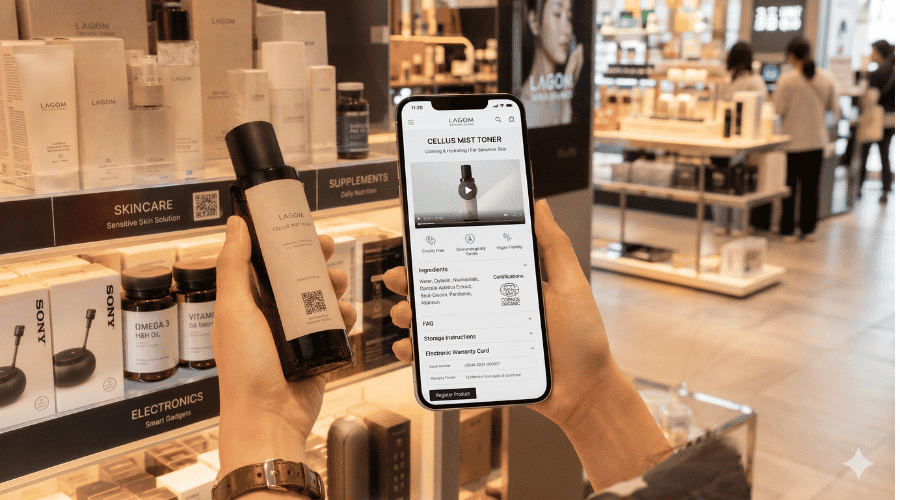 Product information QR code helps customers look up ingredients, certifications and usage instructions before buying
5. QR Code Coupons and Offers to Trigger Purchases
The customer already knows your product, has looked it over, but hasn't pulled the trigger yet. Return rates after a first browse are low, and retargeting through paid ads gets more expensive every year.
A QR code on a flyer, poster, packaging, or product sampling table takes customers directly to a voucher, a time-limited flash sale, a members-only offer, or a free gift with purchase — no discount code to type in, no coupon to remember.
Why this QR code marketing idea works:
Creates a sense of instant reward: Offers appearing right after scanning create an immediate positive reaction – driving higher purchase action than regular banners.
Reduces code entry friction: Customers don't need to remember or type promo codes. The QR automatically applies it or moves them straight to the cart with the deal attached.
Measures campaign effectiveness: Each QR at each location generates unique scan data, helping identify which channels and positions yield the highest conversions.
Best-fit industries:
Retail: Customers often need a “final nudge” to buy at the point of sale. QR vouchers turn hesitation into instant action.
Café & F&B: High repeat purchase frequency makes QR coupons particularly effective for pulling customers back within the next 7–14 days.
Popup stores & Booth events: Short exposure time means offer QRs boost on-the-spot conversion instead of letting customers overthink.
Ecommerce with offline stores: QRs connect offline experiences with online carts, especially effective when products are out of size or color in-store.
Common SME mistakes:
Over-relying on discounts — if a QR code always delivers 20–30% off, customers will learn to wait for the deal instead of paying full price; segment your QR strategy between acquisition offers for new customers and retention offers for returning ones
No deadline or urgency — offers without an expiry date don't create FOMO; attach a countdown or a specific end date to the landing page
Not tracking actual conversion — knowing how many people scanned without knowing how many actually bought is incomplete data; set up conversion pixels or UTM parameters from the start
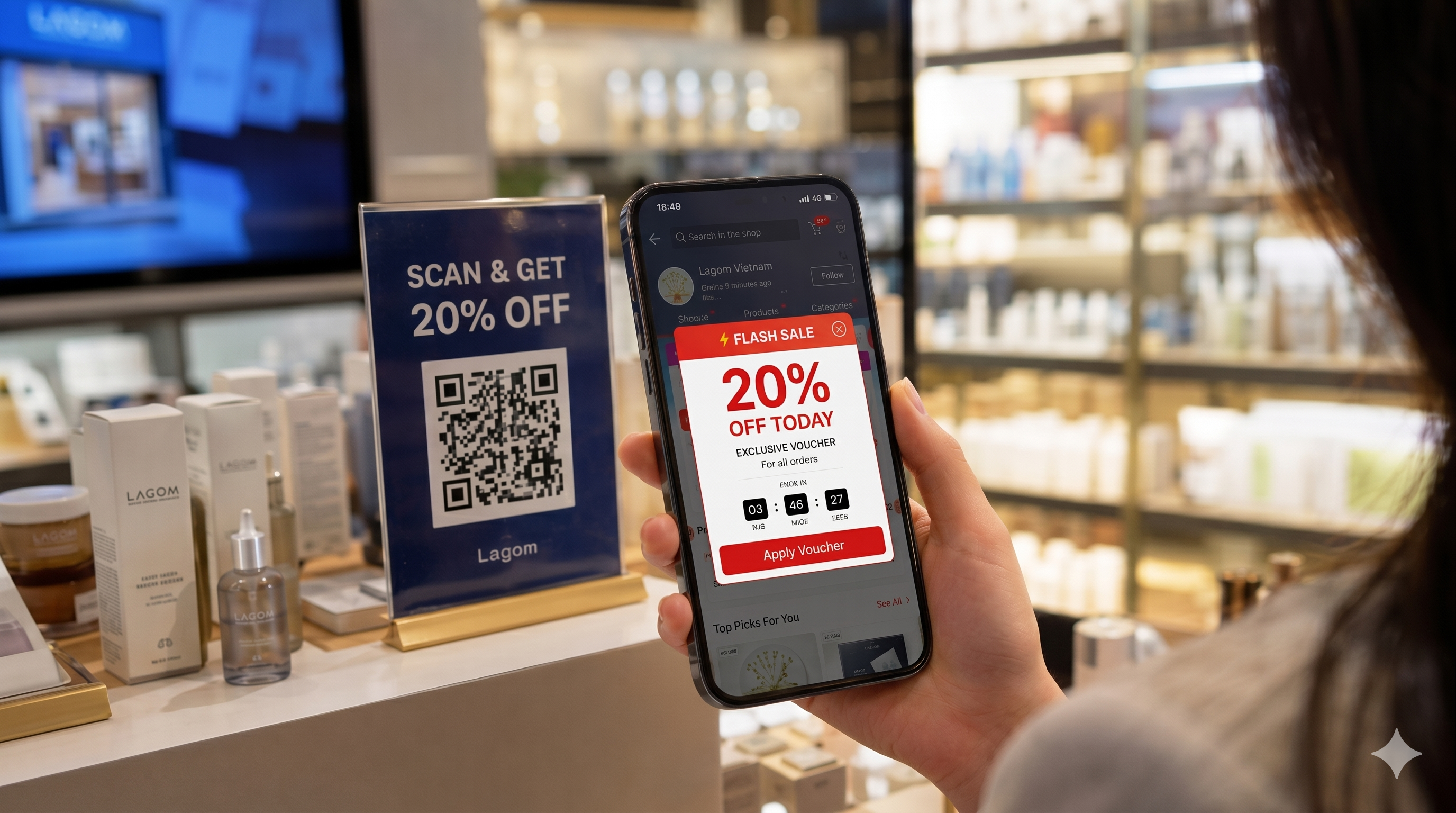 QR coupon marketing with time-limited offers helps increase purchase rates at the point of sale
6. QR Code Linking to Your Online Store to Convert Offline Visitors
Customers walk into your store, browse around, even find something they like — then walk out without following your social channels, visiting your website, or leaving any digital trace. You don't own that relationship after they leave.
QR codes placed near displays, at checkout counters, or at the entrance can lead to your Shopee storefront, TikTok Shop, website, product catalog, or an online-only offer. The goal: turn offline visitors into digital followers you can reach again.
Why this QR code marketing idea works:
Converts offline traffic into a digital audience: Each scan is a signal of interest. With tracking pixels, that customer becomes a target for later remarketing ads.
Increased shop follows: When QRs lead to TikTok or Shopee stores with small incentives for followers, the offline-to-online follower conversion rate increases significantly.
Easy to measure: Compared to traditional signs or flyers, QRs provide specific data: number of scans, when, and where.
Best-fit industries:
Showrooms / Furniture / Motorbikes: Customers view in person but rarely buy instantly – QRs keep them in the purchase journey via catalogs or online deposit pages after they go home.
Small Retail / Local Fashion: Cannot display all stock in-store – QRs lead to the online store for customers to see the full collection and order.
Fair Booths: Temporary sales points with no fixed address – QRs are the only way to turn passersby into followers or long-term online customers.
Cafés selling side products: Customers like a product while at the shop but don't think to buy more – QRs on tables or cup sleeves turn positive emotions into instant purchase actions.
Common SME mistakes:
Linking to a generic homepage — a QR next to Product A that leads to a homepage with 200 products loses people immediately; link to the specific product page or relevant collection
Too many steps after scanning — if customers need to create an account before seeing prices or adding to cart, they leave; keep the post-scan journey to two steps maximum
No added value — a QR that simply mirrors what's already in the store gives people no reason to scan; add something: an online discount, free shipping, or products only available online
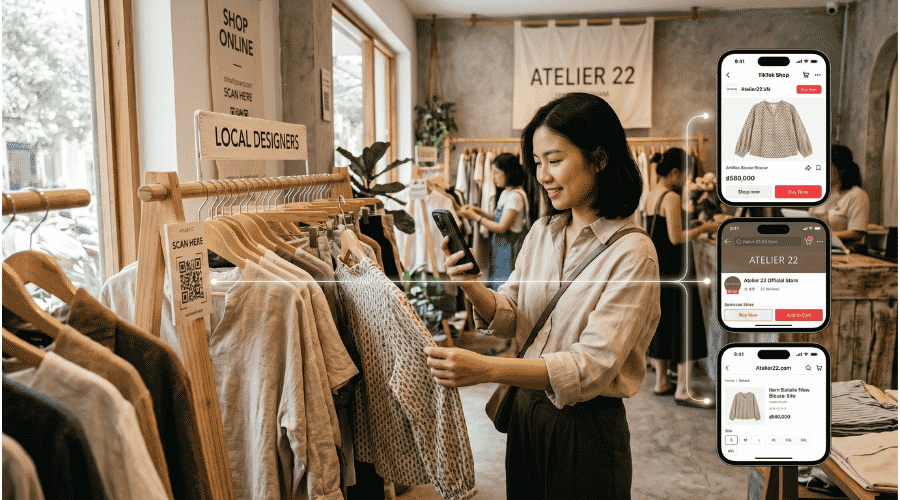 Omnichannel model using QR to connect offline and online shopping experiences for retail SMEs
7. QR Code Gamification to Boost Engagement
A QR code that opens a lucky spin, a prize hunt, a mini-game, or a points-earning challenge gives customers something to participate in — an experience with surprise and reward rather than passive information delivery. It also reduces printing waste and the fate of most flyers: the recycling bin.
Why this QR code marketing idea works:
Stimulates curiosity: The element of surprise is a much stronger scan driver than standard 'scan for offer' messages.
Increases interaction time: Mini-game players spend an extra 30–90 seconds interacting with the brand, forming deeper brand memories.
Creates repeat scan habits: If games can be played multiple times or points accumulated daily, customers return to scan more than once – something impossible with regular QRs.
Best-fit industries:
F&B, FMCG, shopping malls, sampling events, brand activations — any context where creating a fun atmosphere and drawing a crowd at a direct touchpoint is the goal. Gamification is also particularly effective in queuing situations, turning idle wait time into active brand interaction.
Common SME mistakes:
Game too complex — if it needs a 5-step tutorial, you've already lost your player; effective gamification must work within 10 seconds of scanning
Prizes not worth it — a 5,000 VND voucher after 2 minutes of play creates a sense of wasted time; the reward needs to feel proportionate, or carry some element of exclusivity
Clunky UX — requiring an app download, account login, or multiple permission grants before the game loads is a dealbreaker for most users
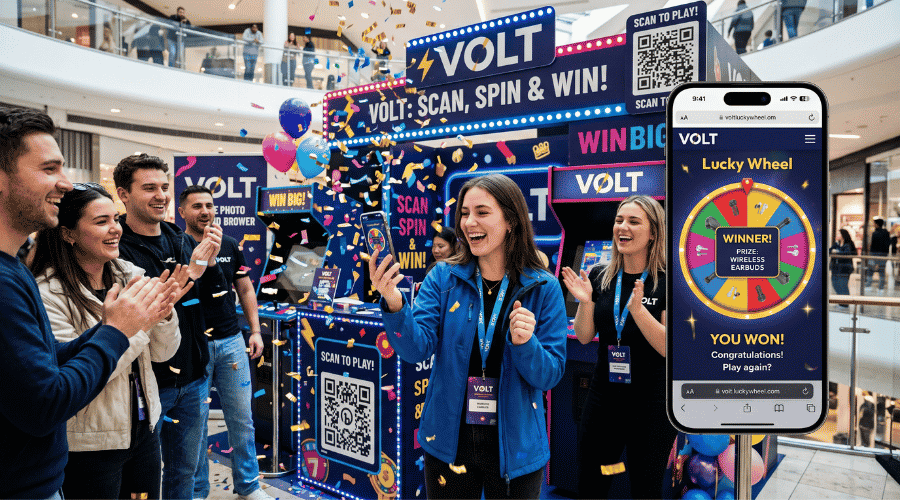 Gamification QR with lucky spin wheel helps brands increase engagement and keep customers longer at events
8. Educational Content QR Code to Help Customers Decide
A QR code linking to a buying guide, product comparison, in-depth FAQ, real customer case study, or an explainer video on how something works is one of the highest-converting QR code marketing ideas for shortening the consideration cycle — especially for high-value or complex products and services.
Why this QR code marketing idea works:
Reduces pre-purchase hesitation: Customers have enough info to self-compare and eliminate risks. The purchase decision no longer depends solely on meeting a good salesperson.
Builds brand authority: Educational content demonstrates expertise. Brands that share knowledge become reference sources, not just sellers.
Supports the content funnel: Readers of buying guides are potential customers in the consideration stage – the ideal time to nurture with high-quality content.
Best-fit industries:
SaaS / Software: Abstract products where value is hard to visualize before use – QRs leading to demo videos or case studies shorten the consideration phase.
B2B Services: Long sales cycles needing to convince multiple internal stakeholders – documents via QR help customers self-convince internally without waiting for sales meetings.
Skincare / Premium Cosmetics: Customers need to understand ingredients and mechanisms before buying – QRs at shelves or testers lead to in-depth content, reducing concern and increasing trust.
Education / Courses: Decision cycles from 1–4 weeks with heavy comparison – content via QR at events or posters helps the brand continue nurturing after initial contact.
Common SME mistakes:
Long, unstructured content — a 3,000-word article with no headers and no summary loses reader interest fast; lead with the most important information and use clear headings throughout
No clear CTA — readers finish the content and don't know what to do next; every educational piece needs at least one call to action: book a consultation, download a resource, watch a demo
Content that doesn't feed a conversion journey — good content that stops at being informative is just a blog post; connect every piece to a clear next step
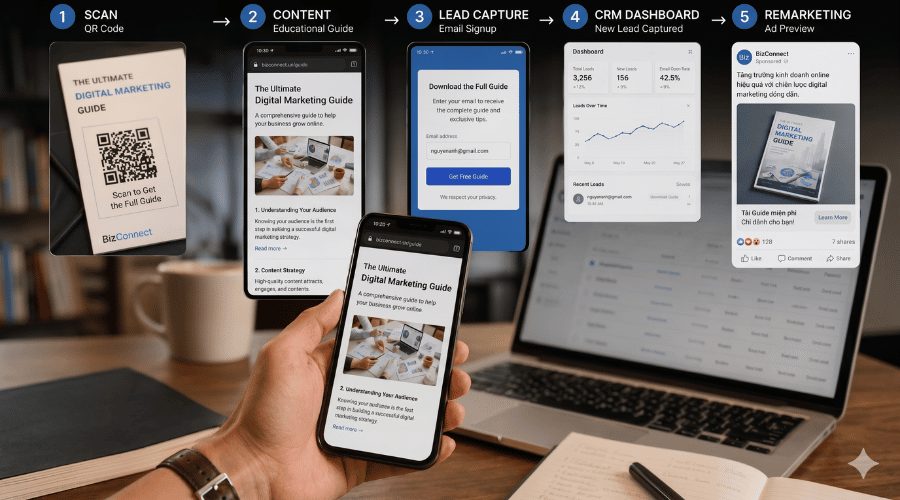 QR leading to buying guides and case studies helps customers self-research before contacting sales or booking a consultation
9. AR-Integrated QR Code to Create Viral Moments
Traditional advertising rarely generates genuine surprise, which is why customers almost never voluntarily share brand content on social media — there's simply no compelling reason to.
A QR code that activates an augmented reality (AR) experience — virtual product try-on, a 3D camera effect, an interactive real-world overlay — creates exactly the kind of moment people photograph and post on their own.
Why this QR code marketing idea works:
Increases voluntary sharing: Novel experiences and high visual impact motivate sharing on stories or feeds – natural media with no extra cost.
Attracts Gen Z: The 18–27 age group has much higher AR interaction rates than regular banners or videos – a competitive edge for young brands.
Increases brand recall: AR experiences are tightly linked to emotional memories. Customers remember the brand that created the experience much longer than regular ads.
Best-fit industries:
AR is best for industries where purchase decisions depend heavily on visuals or personal feel.
Fashion and Cosmetics: Need customers to try before they buy – AR solves this pain point without needing fitting rooms or testers.
F&B with strong branding and Lifestyle brands targeting Gen Z: Suitable because the target audience already has the habit of capturing and sharing – AR just leverages existing habits.
Common SME mistakes:
AR that loads slowly or has compatibility issues — heavy effects lag on mid-range devices, which represent most users in Vietnam; test thoroughly across common devices before launch
Experience too complicated to figure out — if a first-time user needs 3 minutes to understand how to interact, the experience has already failed; design for someone who can engage meaningfully within 10 seconds
No scanning instructions at the placement — AR often requires camera access and sometimes specific setup; without brief, visible guidance at the point of scan, many users quit before the experience even starts
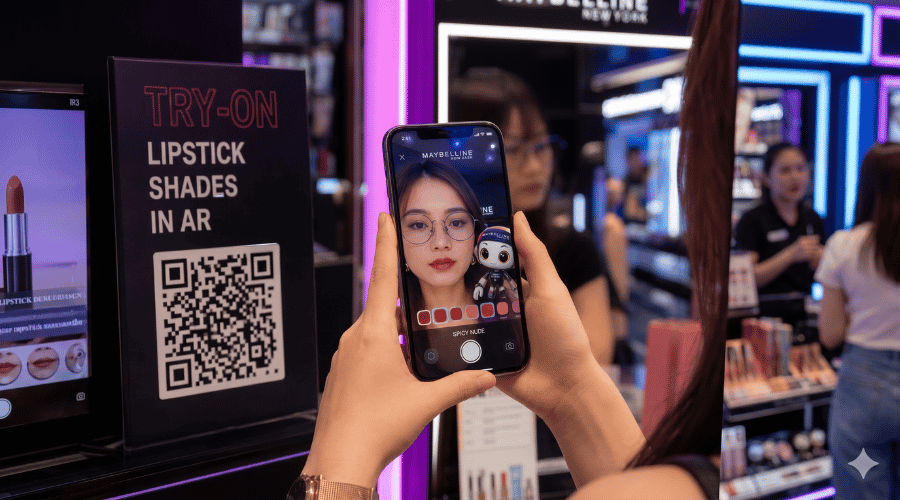 AR product try-on experience via QR helps Gen Z engage with the brand longer
10. QR Code for Data Collection and Remarketing
Rising ad costs, falling returns, and zero ownership of customer data — businesses that rely entirely on ad platforms are sitting on a long-term vulnerability they can't control.
A QR code leading to an email sign-up form, a loyalty program enrollment page, a free gift claim, or a member offer is one of the most effective ways to collect first-party data at the point of sale — data your brand owns and controls outright.
Why this QR code marketing idea works:
Collects sustainable first-party data: Emails and phone numbers collected via QR belong to the business, unaffected by algorithm changes or platform price hikes.
Increases retention and reduces costs: Nurturing old customers via email, SMS, or Zalo costs 5–10 times less than pulling new ones via paid ads, with typically higher conversion rates.
Builds own channels: Email lists are long-term marketing assets. When social platforms change policies, the business has a direct communication channel with customers.
Best-fit industries:
Retail and Ecommerce with offline points: Need to sync physical data into CRM systems.
Spa, Salons, Clinics: Small customer bases but high lifetime value – every retained customer is worth much more than a new one.
F&B with loyalty programs: This is almost a survival condition to maintain renewal rates.
Common SME mistakes:
Asking for too much upfront — requesting full name, email, phone, date of birth, and address in a single first interaction makes customers reluctant; ask only for email or phone number at first, collect the rest after trust is established
No follow-up automation — collecting 500 emails and not sending a welcome sequence or nurture campaign lets that list go cold; set up at least one basic automated email flow
No value exchange — customers won't share their information without receiving something meaningful in return; free shipping, a small voucher, a downloadable resource, or loyalty points are enough to create that motivation
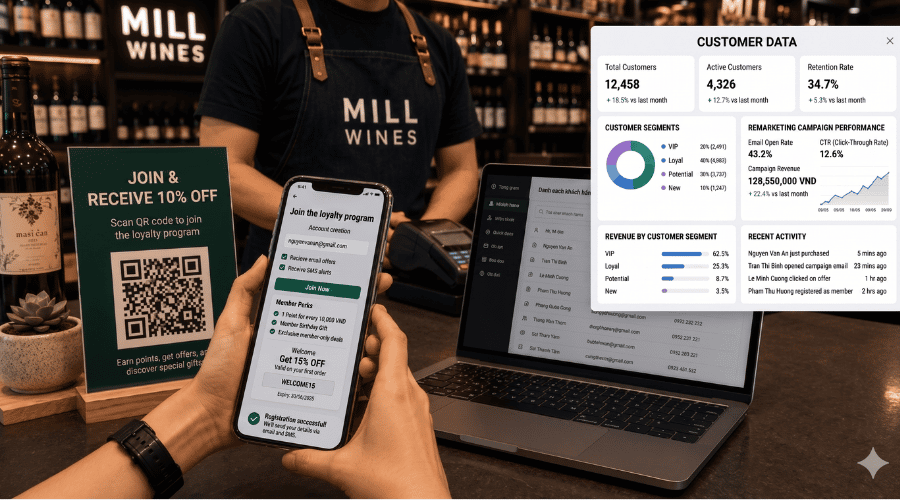 Loyalty QR code helps businesses collect first-party data and build a long-term remarketing customer base
11. Smart Digital Menu QR Code to Increase Average Order Value
Paper menus cost money to reprint with every update, can't upsell automatically, and don't leverage customer reviews or smart combo suggestions. Staff rarely have time to walk every table through the menu in detail.
A QR code menu that integrates combo suggestions, food photography or short videos, real reviews from previous customers, online payment, and a loyalty points program — all within a single interaction — turns your menu into an active sales tool.
Why this QR code marketing idea works:
Increases Average Order Value (AOV): Beautiful images, enticing videos, and 'often ordered with' suggestions stimulate extra orders. Research shows integrated digital menus increase AOV by 15–30%.
Instant updates with no printing costs: Change prices, add dishes, mark out-of-stock – all done in minutes without reprinting. Vital for seasonal menus.
Automated upsell without staff: Combo and add-on suggestions are built into the menu. Customers view and decide for themselves without feeling pressured.
Best-fit industries:
The entire F&B industry benefits but to different degrees.
Mid-to-high-end restaurants: Need flexible updates and visuals matching their positioning.
Café and Beverage chains: Need to increase order value during peak hours without adding staff.
Bars and dark spaces: Solve the practical inconvenience of hard-to-read paper menus. Multi-branch chains save huge operating costs with one-time updates across the system.
Common SME mistakes:
Hard to navigate — a digital menu with many categories and no clear filtering forces customers to scroll endlessly; aim for no more than 3–4 main categories visible at the first screen
Heavy images that load slowly — high-resolution food photos that aren't compressed can make the menu take 10 seconds to load; compress images to under 200KB each without noticeable quality loss on screen
No payment or loyalty integration — a QR menu that's just a list of dishes offers minimal advantage over a paper menu; payment and points features are what unlock the full potential of the format
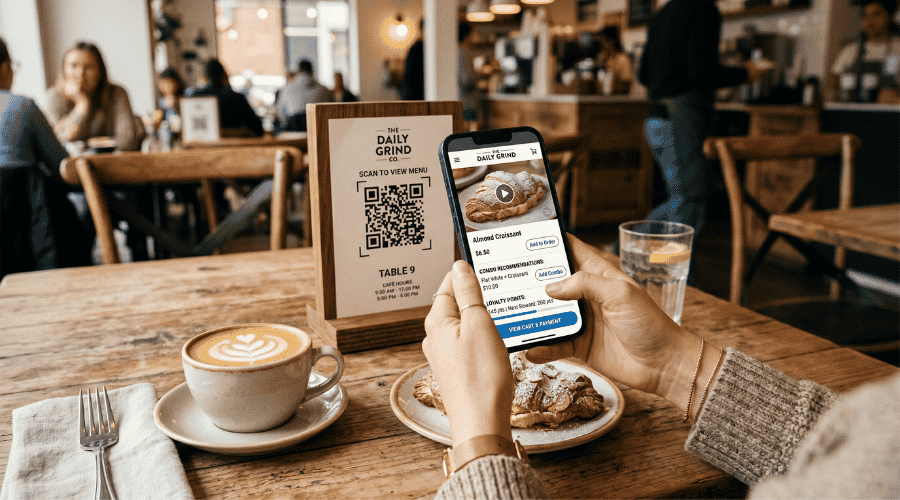 Digital QR menu supports loyalty programs and quick menu updates for cafes and F&B businesses
12. QR Code on Packaging to Turn the Unboxing Into a Marketing Channel
After a customer buys, most brands lose contact completely. There's no touchpoint to prompt a repeat purchase, encourage referrals, or build a community around the product.
A QR code on the packaging, product box, or a thank-you card can link to a loyalty program, a social media challenge, advanced usage tips, a refill or reorder subscription, or a customer community. Packaging stops being a container and becomes an ongoing marketing touchpoint.
Why this QR code marketing idea works:
Increases repeat orders: QRs leading directly to a re-order page reduce friction to near zero. Customers don't need to find the shop or remember the product name.
Extends customer lifetime value: Every box opening is an opportunity to pull customers deeper into the brand ecosystem – joining loyalty, communities, or sharing experiences.
Packaging becomes a media channel: Packaging costs are already incurred; adding a QR only costs extra ink – but turns packaging into a media channel with no extra distribution cost.
Adds post-purchase touchpoints: The customer journey doesn't end at payment. Packaging QRs create touchpoints during the most critical phase – when the customer is using the product and forming an opinion.
Best-fit industries:
Most effective for industries where the relationship doesn't end after the first purchase.
FMCG and Subscription products: Depend on periodic re-purchase – QRs reminding to re-order right as the product is running out is the most natural touchpoint.
DTC brands: No supermarket shelves, so packaging is the only direct contact channel after delivery.
Handmade and Lifestyle brands: Sell through stories and community – QRs turn every unboxing into a chance to pull customers deeper into the ecosystem.
Common SME mistakes:
QR too small to scan reliably — many businesses shrink the code to fit tight packaging space, which leads to high scan failure rates; the minimum functional QR size is 2 × 2 cm; if space doesn't allow it, place the code inside the box lid or on an enclosed thank-you card instead
Placed where no one looks — a QR on the bottom of the box or a hard-to-find surface will almost never be scanned; place it on the front face or the inside of the lid — wherever the customer's eyes land first when opening
Nothing worth scanning to — a QR that leads to the same product page or generic homepage offers no additional value to someone who already bought; create a dedicated post-purchase page with advanced tips, a community link, and a repeat-purchase offer
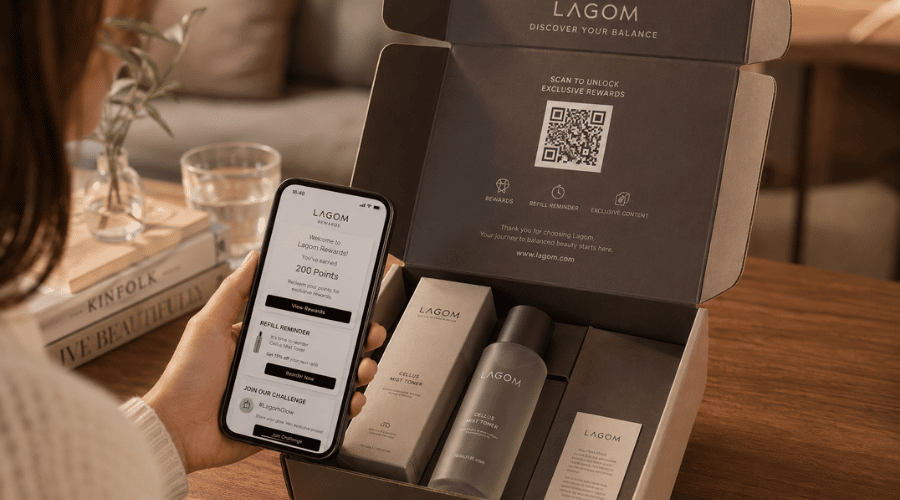 Packaging QR code helps brands increase repeat purchase rates and build loyalty after customers receive their orders
How to Choose the Right QR Code Strategy for Your Business
No single QR strategy fits every business — what matters is defining the right objective before selecting an implementation approach.
If the goal is driving conversions at the point of sale, prioritize coupon QRs, product QRs, or gamification QRs — these tap into purchase intent at exactly the right moment. If the goal is building a sustainable customer database, data-capture QRs and packaging QRs are a better fit, helping businesses own their communication channels rather than relying entirely on paid ads. For driving offline-to-online traffic, digital storefront QRs and event QRs are the most natural choice.
A few universal principles that apply regardless of which QR type you deploy:
Landing pages must be fully mobile-optimized — over 90% of scans happen on smartphones, and a slow or clunky page will lose users instantly.
Prioritize dynamic QRs over static ones whenever the post-scan content may need to change — dynamic QRs allow destination URL updates without reprinting, while also tracking scan volume, device type, and timing. If the difference isn't entirely clear yet, generating a test QR code to see how it works in practice is a good starting point.
Use a unique QR for each distribution channel to identify which channel drives the best results — pooling data across channels makes meaningful analysis significantly harder.
Make the CTA explicit at the point of scan — users need to know what they're getting before they hold up their phone. "Scan to claim your offer" consistently outperforms a bare QR code with no context.
If you're looking for a low-friction starting point: pick one objective, deploy one QR type across one channel, measure results after 30 days, then scale — rather than launching across the board with no baseline to optimize from.